How to Check if Tyres Need Replacing: A Practical Checklist for Fleets & Owners
Date: 12 February 2026
How to check if tyres need replacing? Every driver or fleet manager comes across these questions at some point. Tyre failure means delayed delivery and disrupted operations for fleet managers. As a result, clients are unhappy, and unexpected costs keep piling up.
Dealing with a tyre blowout on a busy highway is the worst experience. So, keeping tabs on tyre health is a must to keep the fleet’s health optimal.
It’s true that tyres are built durably, irrespective of their brand. But they have a specific lifespan, and the smart thing to do is to know when to change them. If you’re wondering how, we have a simple checklist with a friendly guide to help you get started.
Make Your Fleet Tyres Last Longer: Discover expert maintenance hacks to improve tyre durability and cut costs.
A Checklist to Track Tyre Health for Replacement
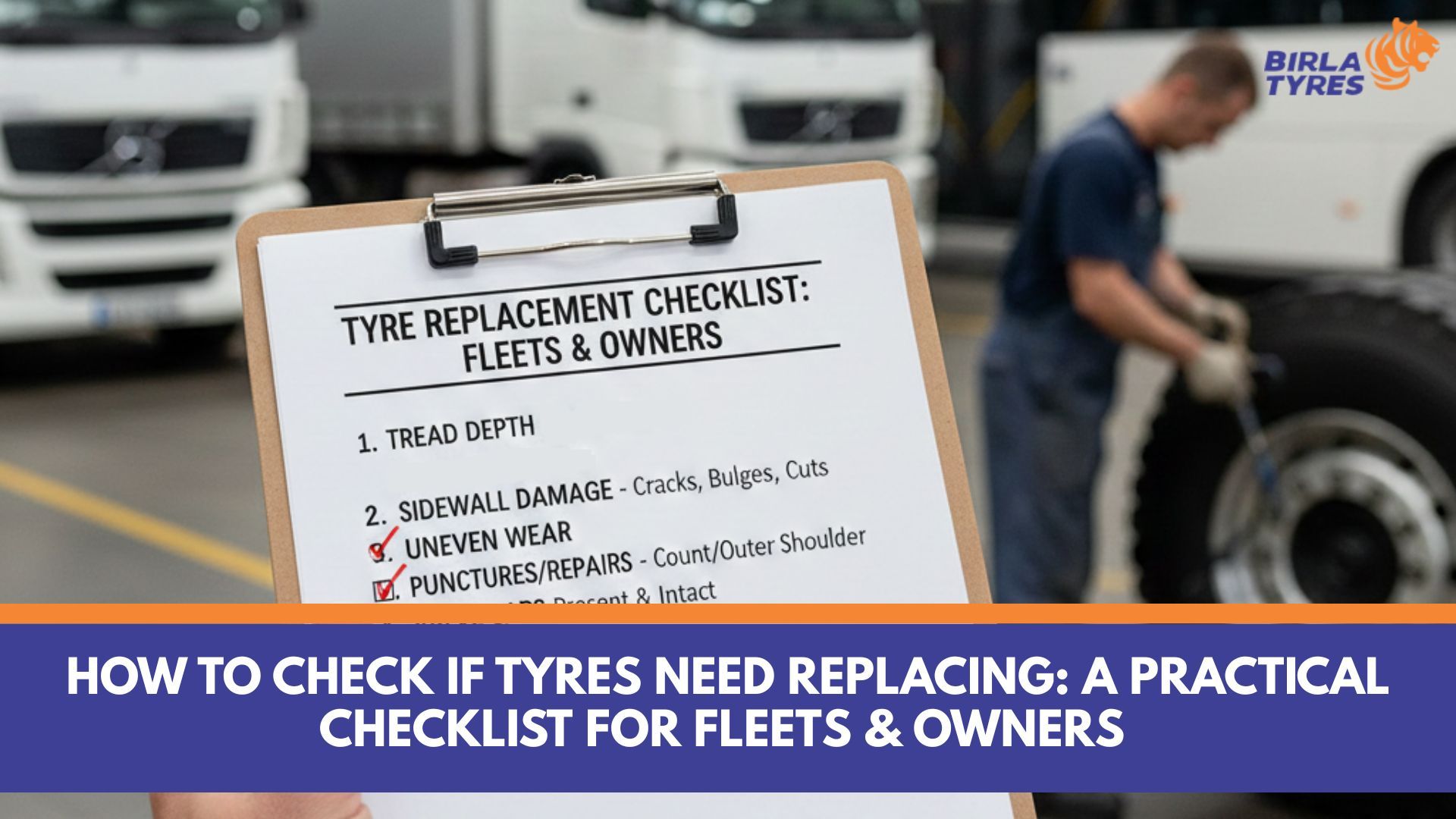
Track these seven signs regularly to understand whether your truck bias tyres need replacement or not.
1. The Tread Depth Test
Your tyre tread is what grips the road. As it wears down, braking distances increase and handling gets worse, especially in the rain. A quick tread depth test can save you from nasty surprises.
Here’s a trick: Take a coin and insert it into the tread grooves. If most of the coin is visible, your tread is too shallow. Fleet managers often use gauges for accuracy, but even a coin test works for daily checks. For commercial vehicles, replace before the minimum tread if casing integrity is compromised or retread viability is affected.
Pick the Right Truck Tyre Tread: Discover how tread patterns affect traction, grip, and tyre wear.
2. Bulges & Sidewall Damage
Sidewalls don’t get as much attention as treads, but they’re just as important. Bulges, cracks, or cuts on the sidewall are red flags. They typically indicate the tyre’s internal structure is compromised.
Observing tyre sidewalls is critical for both truck and tractor tyres. Your sidewall can be compromised even when the tread depth looks fine. So, if you were wondering how to check if tyres need replacing, a damaged sidewall is a clear sign.
Remember, sidewall damage isn’t something you patch. For commercial vehicles, sidewall damage significantly increases blowout risk under load and heat. Therefore, your vehicle needs a tyre replacement.
Maximize Tyre Life with the Right Load Capacity: Explore how load index impacts durability and safety in farm tyres.
3. Punctures vs Patching
Not every puncture means you need a new tyre. Small punctures in the tread area can often be fixed. But here’s the golden rule: patch vs replace depends on the size, location, and frequency.
Punctures near the sidewall or shoulder area should not be repaired. Large cuts, multiple close punctures, or any damage exposing cords require replacement. If the same tyre has been patched multiple times, its structural integrity may be compromised. Fleet operators often track the history of punctures or damage in this case.
4. TPMS Alerts and Tyre Pressure Checks
Modern vehicles come with TPMS (Tyre Pressure Monitoring Systems). If you see that little warning light, don’t ignore it. Low pressure can mean a slow leak, a puncture, or simply neglected maintenance.
Even without TPMS, regular tyre pressure checks are essential. Underinflated tyres wear faster, reduce fuel efficiency, and can overheat. Overinflated tyres, on the other hand, lose grip.
Keep Your Birla Truck Tyres Road-Ready: Discover the complete A–Z checklist for maintaining long-lasting truck tyres.
5. When to Replace vs Retread
For fleets, retreading can be a cost‑effective option. It’s basically giving tyres a second life by replacing worn tread with new rubber. But here’s the catch: retreading only works if the casing is still strong.
Retreading is not recommended if the tyre shows:
- Sidewall damage or bulges
- Deep cuts reaching the ply or cords
- Bead damage
- Signs of heat separation or structural fatigue
If the tyre has sidewall damage, deep cuts, or structural issues, retreading isn’t safe. Owners often ask, “Should I replace or retread?” The answer depends on the condition. Retread is great for commercial vehicles with heavy usage.
6. Age Matters Too
Even if your tyres look fine, age can be a silent killer. Rubber hardens over time, losing flexibility. Most experts recommend replacing tyres every five to six years, regardless of mileage. That’s why checking the manufacturing date stamped on the sidewall is important.
Fleet managers often set clear policies for patching and replacing. One patch is acceptable; two patches push it; beyond that, replacement is mandatory.
Why This Matters for Fleets and Owners
Tyre health is directly related to costs and reliability for fleets. A single breakdown can mean going off the schedule, increasing expenses for fleets. On the other hand, safety, comfort, and expenses after a tyre failure become key concerns for single-vehicle owners.
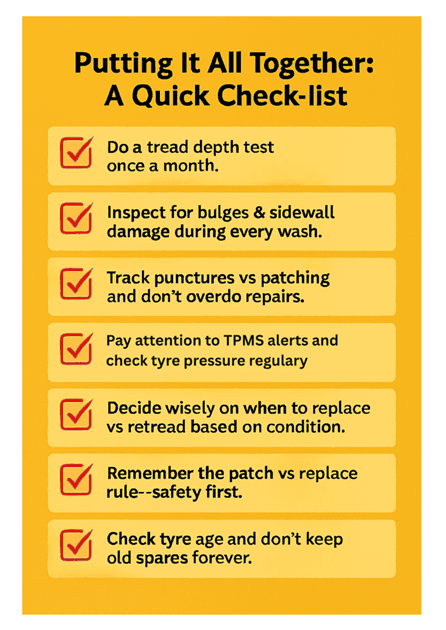
There you have it: a straightforward checklist to answer "how to check if tyres need replacing" before they turn into a costly affair. Whether you’re a single vehicle owner or managing a fleet, prioritise your vehicle tyre health to avoid failures and downtimes. Remember, regular inspections are more than maintenance; they are lifesavers.
Want Safer Drives? Start with Your Tyres: Learn how proper inspection improves safety and tyre life.
Training your fleet drivers and operators also helps to build the right tyre maintenance checklist. Refer to this checklist to build your own personalised checklist.
Need further help? Check out the Birla Tyres “Blogs” section.