Tyre Inspection Made Simple: How Experts Check for Safety and Performance
Date: 31 January 2026
Regular tyre inspection is mandatory even if your vehicle isn't running thousands of miles a month. Agriculture vehicles may not always need to run thousands of miles. But the landscape of the farms is quite challenging.
It's smart to keep track of the tread wear, tyre inflation, or damages like scrapes, bulges, cracks on your agricultural tyres. No, you don't need a pit crew or fancy gear to inspect tyres like a pro. Ten minutes, once a month, and you'll catch 90% of issues before they become a drama. Let's do this together, step by step.
10-Minute Tyre Inspection Guide
Here are simple steps to inspect the tyres on your vehicle:
1) Start with Pressure (Cold), Every Month
Grab a simple pressure gauge. Check when the vehicle's been parked for 3+ hours (or before driving). Next, set PSI to the vehicle placard on your door jamb, not the number on the tyre sidewall.
It's important to remember that cold checks are more accurate, and TPMS alerts don't replace manual checks. So whether you're taking your agricultural vehicle out on the field or not, make sure to maintain regular tyre pressure checks for longer tyre life.
2) Read Tyre Tread Depth the Quick Way (Coin Tests)
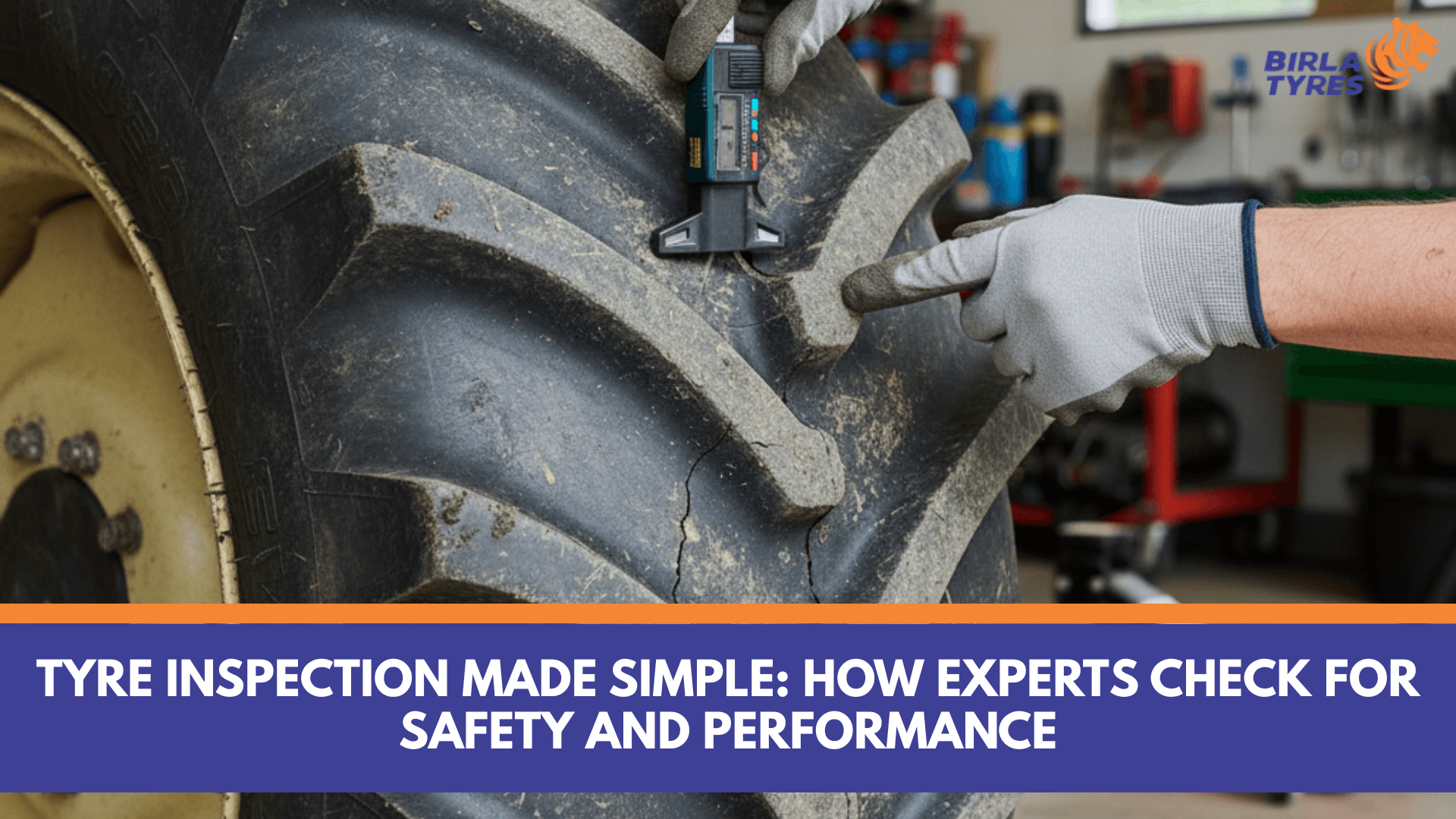
We recommend using a coin or tread gauge for fast checks. Replace tyres at or below 2/32″ tread depth, the legal wear limit in many regions. However, our safety experts advise acting at 4/32″ for superior wet-road braking and hydroplaning resistance on farm terrains. Wear bars in the grooves signal the 2/32″ hard limit. This is important for agriculture tyres, mining, and bus bias tyres.
Pro tip from our team: Test three spots—inner, centre, outer. Uneven wear often signals inflation or alignment problems, maximising Birla tyre longevity.
3) Scan for Damage (Sidewalls, Tread, Beads, Valves)
Make checking of cuts, bulges, cracks, embedded nails/screws, or slow leaks part of your tyre inspection checklist. Bulges and deep cuts mean the tyre is out of service. So, don't gamble with bulges and get the tyres replaced soon. Additionally, inspect valve stems and caps too; a cracked stem can mimic a "mystery slow leak."
If you find a puncture, remember the repair rules: small holes in the tread (up to ~¼″) can be repaired with a proper patch plug, but no repairs for sidewalls or large/complex injuries. Driving on a flat even briefly can ruin the casing, so demount and inspect internally.
4) Decode Wear Patterns (they tell a Story)
Both shoulders worn signals under-inflation. So, top up the air and recheck pressure promptly. On the other hand, center tread wear indicates over-inflation. So, refer to the vehicle placard PSI for even usage.
Additionally, feathering, sawtooth, or one-sided wear points to misalignment; schedule an alignment without delay to prevent further damage. Cupping or scallops suggest an imbalance or worn suspension components. Therefore, have it professionally inspected soon. These tread patterns are your tyres' warning signals; monthly tyre inspection helps you spot these patterns and helps cut costs and extend tyre life significantly.
5) Check Age—Rubber doesn't Last Forever
Locate the DOT date code (four digits: week + year) on your sidewall for precise age tracking. We advise closer inspections after 4 years and retirement around 7-8 years from manufacture, even with ample tread remaining age and heat degrade rubber silently.
Real farm lesson: "Good-looking" tyres on a low-use tractor seem fine tread-wise, but sidewall micro-cracks cause vibrations. So, inspect your tyres regularly for peak safety and performance.
6) Tyre Rotation & Alignment
Rotate the tyres as per your owner's manual; if not listed, a common recommendation is every 5,000–8,000 miles. Follow with a quick PSI reset.
7) Don't Forget the Spare (or Kit)
Tyre inspection shouldn't be limited only to the tyres mounted on the vehicle. If you have a spare, check its pressure monthly. If the vehicle came with a sealant kit or run‑flat tyres, learn the limits and procedures ahead of time.
8) Extra Checks for Heavy Use and Fleet Duty
Farm haul roads, field entries, and long hauls in peak heat stress tyres heavily. This is pretty common in tractors. Perform a walkaround each shift: inspect sidewalls, beads, twinned tyres, debris, and match pressures across all. Standardise checks with farm manuals for consistent lifecycle maintenance, maximising Birla tyre durability in tough conditions.
Follow Basics for Bigger Yields!
Tyre inspection demands just minutes but delivers massive rewards: shorter braking in rain, fewer roadside flats, improved fuel economy, and tyres that last seasons longer. Master the basics, cold PSI, tread depth via coin test, damage scans, DOT age checks, and timely alignments, and your Birla Agriculture Tyres will perform reliably through tough farm hauls.
Consistent, disciplined care maximises safety, cuts costs, and ensures peak performance day after day. Stay vigilant; your fields depend on it.