How Load Index Impacts Safety in Agriculture Bias Tyres
Date: 27 January 2026
In modern agriculture, tyre safety is just as important as engine power. Whether you need a tractor (agriculture vehicle) for ploughing or hauling your harvest through muddy fields and rural streets, tyre safety is essential.
However, there’s no need to compromise on performance, efficiency, and cost effectiveness of your vehicle to ensure safety. Tyre safety maintenance helps you adjust both ends—performance and safety—without making many adjustments to your operating cost. Selecting the right agriculture bias tyre with a proper load index drastically improves the graph of safety, without tearing a hole in your pocket.
Bias tyres are a trusted choice for farmers due to their robust construction method and affordability. Most importantly, the criss-cross pattern design of the bias ply tyres makes them efficient for the versatile Indian terrain.
However, there are multiple critical factors impacting the performance of agriculture bias tyres and their safety. A crucial factor among them is load index. Knowing how much weight your vehicle can handle, ensures tyre safety in the difficult environments of farms, fields, and roads.
What is the Load Index in Agriculture Tyres?
Load index is a numerical code on the tyre. It represents the maximum weight the tyre can handle at a specific speed and maximum inflation pressure. For example, if the agriculture bias tyre on your tractor has a load index of 121, it means that the tractor can carry 1450 kg per tyre under rated conditions.
- Load Index & Speed Symbol (e.g., 139A8)
- Brand Name: Birla Tyres
- Model Name: Shaan+
- Construction Type: Bias-ply (indicated by a dash “-” instead of “R”)
- Tread Pattern Code (internal reference)
- Country of Manufacture
- IS Code or BIS Mark (for Indian regulatory compliance)
[Disclaimer: The load index might vary depending on the tyre size, ply rating, and farming/haulage requirements.]
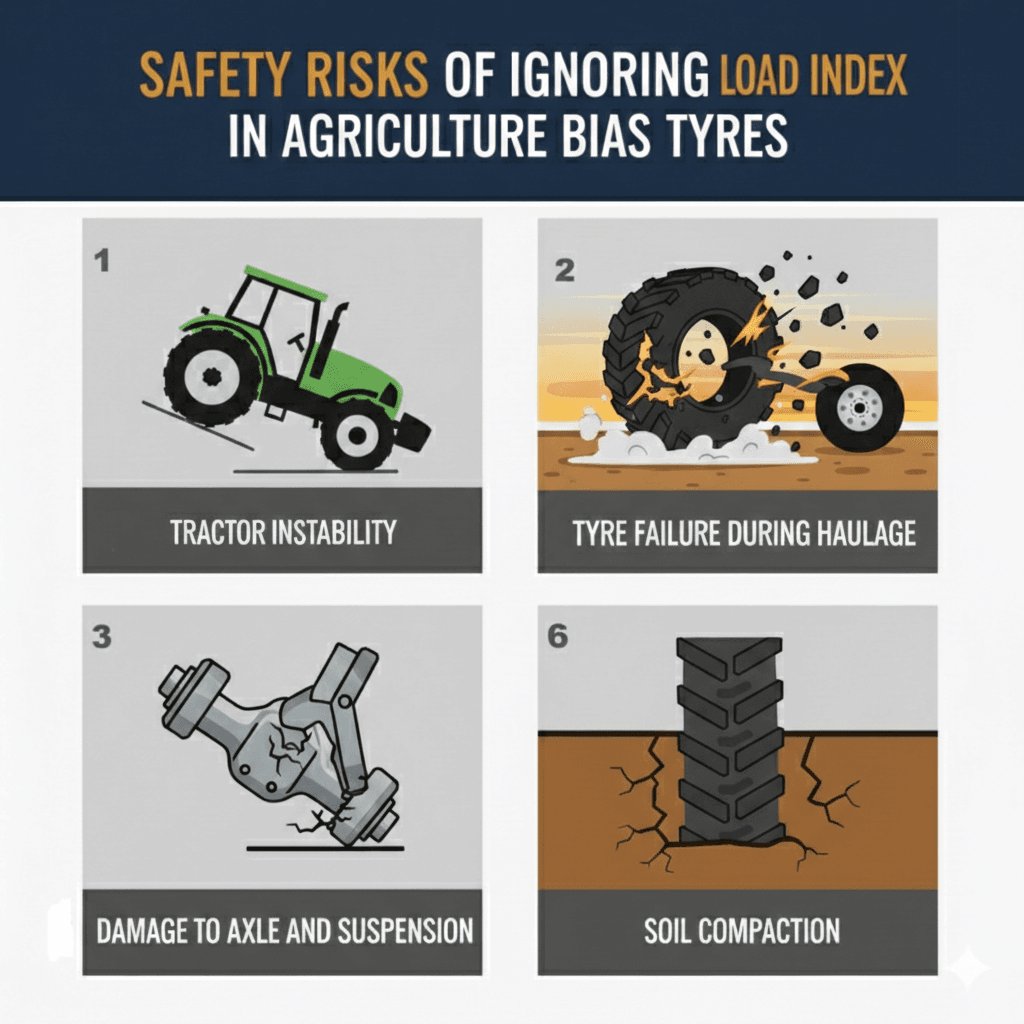
Safety Risks of Ignoring Load Index in Agriculture Bias Tyres
Bias Tyres have strong sidewall designs while they have excellent load-bearing capacity, with the criss-cross bias ply design. However, exceeding the weight limit mentioned on the load index for agriculture bias tyres can challenge their durability.
Excessive load tears the inner engineering, and stress causes the tyres to blow out or suffer premature deterioration and tyre failure. Disregarding the tyre load index can compromise the safety of both the machine and the operator. Ignoring the specified load rating not only reduces tyre life but also poses serious safety risks to both the machine and the operator.
The following are the common risks you can suffer from if you ignore the load index of agriculture bias tyres.
Tractor instability: Extra weight influences increasing rolling resistance. It reduces control over the uneven terrain, making the tractor lose control, especially in open terrain.
Tyre Failure during haulage: Long hauls from fields to different places are common among agriculture vehicle users. Trailers with overloaded experience excessive heat in the tyres, causing them to burst or blow out.
Damage to axle and suspension: Components carry more strain, leading to costly mechanical failures. It can also hinder tyre safety.
Soil compaction: Soil compaction gets exacerbated by biased tyres. Improper load and air pressure put stress on soil, reducing crop yields.
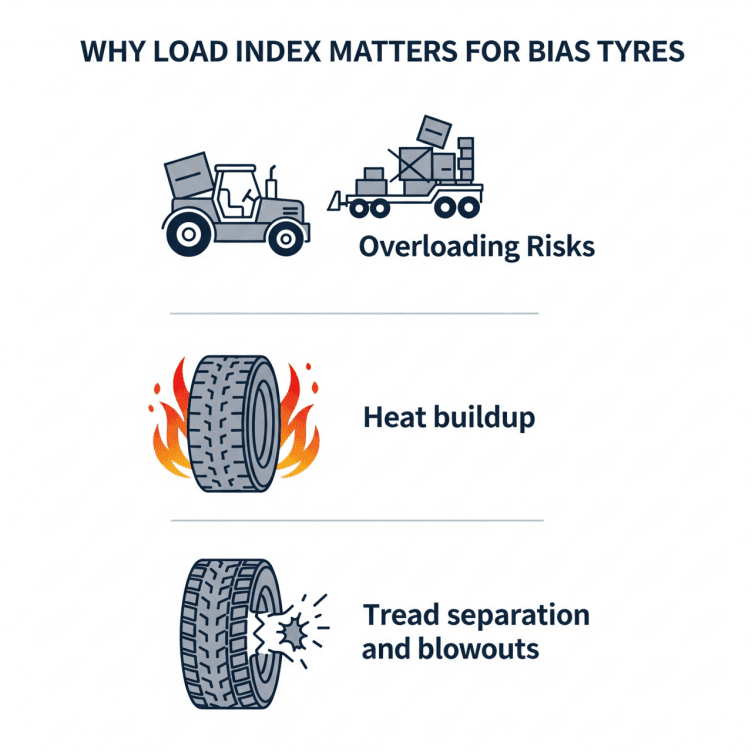
Why Load Index Matters for Bias Tyres
Now that you know the risks ignoring bias agricultural tyre load index can put your vehicle through, let’s discuss its further importance.
Bias tyres have another name, cross-ply tyres. These are constructed from fabric layers placed diagonally across each other. This gives them a strong sidewall and resilience to impacts. However, the load-bearing capacity of the bias tyres is directly linked to the load index.
Risks of using an incorrect load index in biased tyres include:
Overloading Risks: When you don’t know how to spot the load index, you are at risk of overloading your tractor. Overloading reduces productivity through resistance and slow mobility. Additionally, increased loading resistance causes more fuel consumption, increasing cost in the process.
Heat buildup: Avoid heat buildup and ensure tyre safety by knowing the accurate load index of your tractor or agricultural vehicle. Maintaining weight according to the load index reduces excessive stress and increases internal temperature, leading to the tyre failing.
Tread separation and blowouts: Overweight conditions can make the tyre prone to catastrophic failure on the road and out in the field. Heavy weight can separate and wear out the tread pattern and make the vehicle lose traction at any point.
Birla Tyres’ Engineering for Load Safety
Birla Tyres designs its agriculture bias tyres to meet the unique challenges of Indian farms. Models like Shaan Plus and Farm Haul Platina incorporate structural reinforcements to handle demanding loads.
- Reinforced carcass and sidewalls: Engineered to carry heavy rear attachments and trailers.
- Load-optimized tread compounds: Reduce wear and extend mileage.
- Self-cleaning lugs: Prevent soil clogging for better grip.
- Stubble-resistant design: Resists sharp crop stubble damage in fields, improving safety and lifespan.
These features ensure that load safety isn’t just a number—it is built into every tyre.
Ensure Tyre Safety: Best Practices for Farmers.
Bias tyres are inherently durable, but regular maintenance and following best practices as mentioned in the manufacturer’s manual is always a must to maximize their lifespan.
Don’t compromise on the agricultural tyre’s load index mentioned on the tyre’s sidewall when implementing the weight. Additionally, adjust and maintain the inflation pressure of your tyre on a regular basis. A regular visual inspection reveals a lot about your tyre’s safety and health.
Maintain the following tips to ensure tyre safety for your agricultural vehicle:
Maintain Optimal Tyre Pressure
Check the air pressure of your tyre regularly when changing the tyre equipment, or naturally when the tyre’s condition deteriorates over time. Check the manufacturer’s guidelines thoroughly to understand the air pressure for maximum inflation in accordance with the load index. Additionally, avoid underinflating or overinflating your tyre.’
Adhere to Load Capacity
Never overload your tractor. It’s a caution you must always prioritize. Keep checking the load index on the tyre’s sidewall if that helps you memorize and handle different weights when required. Understand the actual load that your vehicle can carry with rated pressure.
Perform Regular Maintenance & Inspection
Quick visual inspections on a regular basis help you keep track of the best practices to operate the vehicle. This means inspecting the tyre for abnormalities, bulges, cracks, tears, and wear on the tread sidewall.
You must also check if the tyre is over-inflated or under-inflated. Wheel rim and tyre alignment balancing is critical. It’s even better to take expert help and get the tyres professionally checked. Rotating the tyres is also a worthwhile solution.
Store Properly
This tip is essential to vehicle owners who love to keep spare tyres for emergencies. Keep the tyre stored in a clean, cool, and dry place to avoid damage. Keep them away from chemicals and sunlight. It’s ideal to store the tyre vertically instead of storing it on the floor horizontally.
Choose Safety & Productivity Simultaneously
Tyre load index is critical to agriculture because it enhances the tyre’s efficiency. It’s the key factor for safety, one that directly impacts farming efficiency. When you choose the correct tyre, it ensures improved tyre stability and helps maintain the vehicle in harsh road environments.
This critical tyre safety factor directly impacts the efficiency of farming, harvesting, and so on. Bias tyre load index is a critical aspect for Indian farmers to check. When you choose the right tyre with the correct sidewall marking, it automatically enhances stability and reduces the cost incurred through breakdowns and constant need for maintenance. However, if you want a more resilient solution, choose Birla Bias tyres for safe and productive farming.
FAQs
Q1. What Happens if I Exceed the Load Index?
When you exceed the load limit, it stresses the tyre’s structure. Eventually, it leads to increased heat buildup and early wear with sudden chances of blowout.
Q2. How do I Calculate the Right Load Index for My Tractor?
The load index should be visible on the tyre’s sidewall. Add up to the weight of the tractor, the expected load, and the implements. Next, divide your findings by the total number of tyres you have. Compare your findings with the load index charts to choose the right bias tyre with the right load index.
Q3. Are Bias Tyres Better for Heavy Loads than Radial Tyres?
Bias tyres offer stronger sidewall protection compared to tyres that are more resistant to rough surfaces and cuts. This feature makes them more suitable for harsh field conditions and offers increased tyre safety with better comfort and improved fuel efficiency.