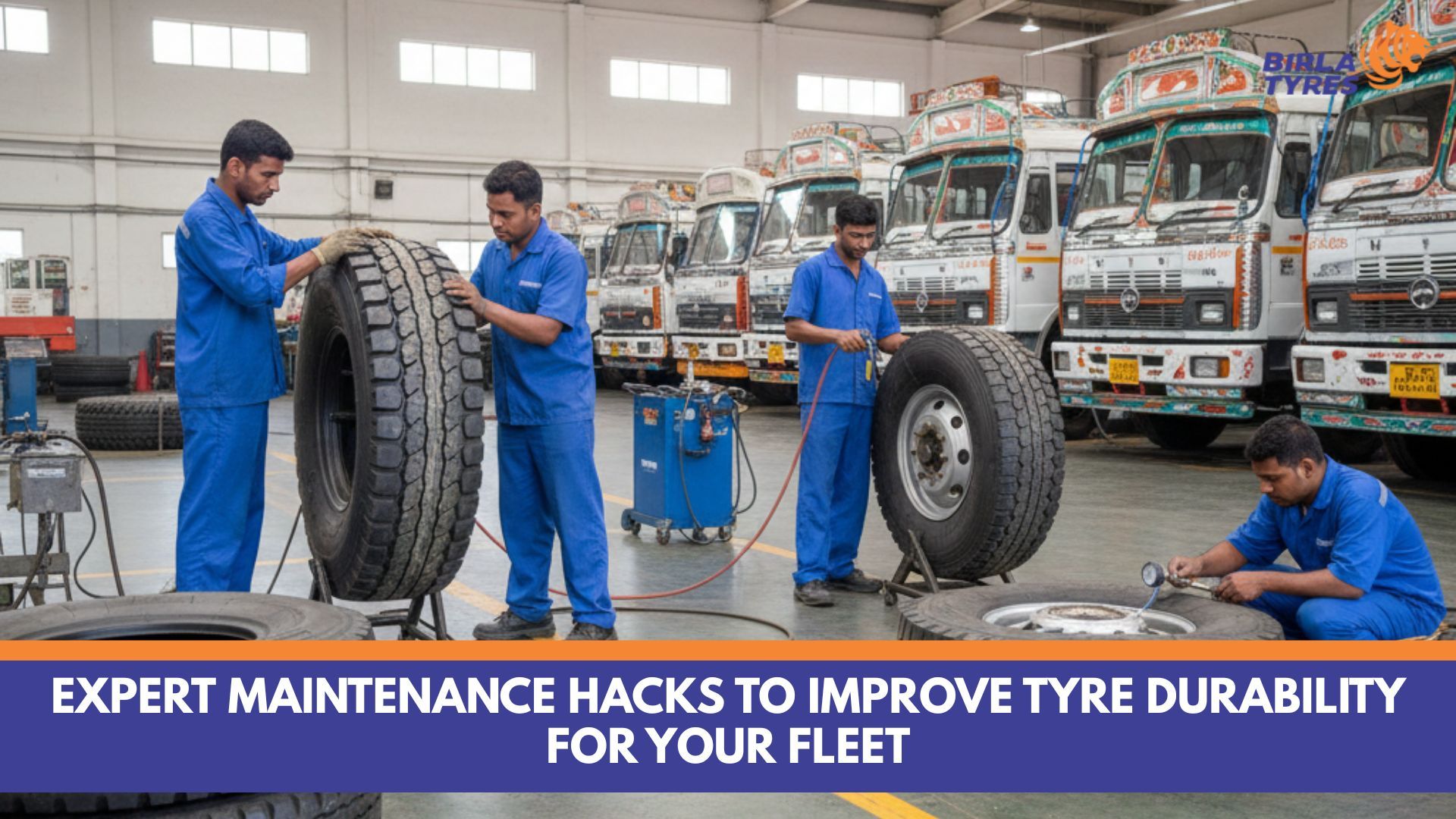
Expert Maintenance Hacks to Improve Tyre Durability for Your Fleet
Date: 09 February 2026
Fleet tyres can wear out fast. The diverse nature of roads with potholes, monsoon slush, dust, and heavy loads takes a toll on the tyres’ health.
Regular tyre checks and maintenance help fleet operators boost safety, prevent accidents, improve fuel efficiency, and reduce operational costs.
As an owner, you can maintain a few regular habits to increase (often double) the lifetime of your tires. Follow the simple maintenance hacks we’ve shared to increase tyre durability.
Why Tyre Durability Matters
Indian landscapes and roads face different weather conditions. Monsoon season, especially, creates challenging terrain conditions for fleets to operate. Trucks often have to slow down or stop. Without regular checks and maintenance as daily discipline, fleets can suffer. Here’s why:
- Wrong pressure causes early failures.
- Skipped rotations make steering tyres wear out fast.
- Good habits can extend tyre life by 25–50% and reduce downtime by about 30%.
When the tyre pressure is paid attention to, and tyres are rotated on time, vehicle owners can enjoy longer tyre life. If you’re using truck and bus bias tyres, checking tyre pressure is a must.
It also has other positive impacts. A safer driving experience, on‑time schedules, and better profits are just a few to mention.
Drive Further for Less Master the 5 essential tyre maintenance habits that slash fleet overhead and boost durability.
Tyre Durability Hacks for Longer Tyre Life
Try these regular habits as tyre maintenance hacks to increase your tyres' durability:
1) Cold Tyre Pressure Checks: Every Morning
Strictly check tyre pressure every morning. Check the tyre cold after shading for a few hours (especially in the morning). If you operate on empty off-roads, keep the tyre pressure 15-20% higher than rated.
When the vehicle is loaded, hit the exact sidewall specs. Also, when the hot tyres show a significant tyre pressure jump, slow down for a while (30 minutes minimum) and recheck.
2) Rotate on Time
Front tyres endure greater stress from potholes and steering, accelerating wear. For highway fleets, rotate every 5,000 km; off-road operations require monthly rotations or based on logged hours.
Position front tyres to rear and side-to-side as permitted, followed by wheel balancing to enjoy tyre rotation benefits. This approach resolves uneven wear, significantly extending tyre mileage.
3) Load Smart, Never Overload
Excessive weight stresses sidewalls, leading to premature failures. Therefore, utilize weighbridges for outbound and inbound checks. Distribute loads evenly, applying rear bias on rough terrain to minimize front tyre strain. This practice also helps maintain safe tyre tread depth for better traction.
Also, inspect shocks and suspension quarterly to maintain overall vehicle efficiency and tyre durability.
4) Tyre Heat Management
Heat generated on the tyres during use has direct implications for tyre durability. Limit speeds to under 40 km/h on rough off-road routes. After heavy hauls, idle the truck for 30 minutes before checking PSI or parking. Store tyres in shade under tarps. Furthermore, if the shoulders feel too hot to touch, allow a cooldown break.
5) Clean, Patch, and Retread
Mud in lugs causes vibrations and accelerated wear. Perform weekly high-pressure washes, avoiding harsh soaps that degrade rubber. For small tread punctures (≤6 mm), apply a patch plug after demounting and inspection. Additionally, avoid patching shoulders or sidewalls; seek professional section repair or replacement.
Retread quality casings promptly (3–5 cycles possible). Most importantly, store upright in cool, dry conditions away from battery fumes.
Benefits: Reduced cost per kilometre and enhanced casing safety.
Never Miss a Red Flag Learn the exact inspection checklist experts use to spot tyre damage before it leads to downtime.
6) Alignment, Suspension, and Brakes
Misalignment accelerates edge wear, while worn shocks and dragging brakes generate excess heat. Inspect alignment every 10,000 km (monthly for off-road operations), checking camber, toe, shocks, springs, and brakes comprehensively. Benefits: Smoother handling, reduced wear, and 5–10% fuel efficiency gains.
7) Use Simple Tech
TPMS provides alerts for low pressure or high temperatures. Also, tags track rotations and positions effectively. Use of tech tools like TPMS helps maintain tyre durability and boost efficiency in the long term.
A good regular habit is to monitor wear bars for timely replacement. This basic monitoring can significantly reduce downtime for fleet operators.
Inside the Strength: Uncover the science powering Birla Tyres’ bias technology.
Quick Recap (Easy to Remember)
Refer to this quick summary if you’d like to have a small checklist to maintain tyre durability.
- Cold PSI every morning: Check tyre pressure when cold each morning to extend tyre life by 25%, preventing underinflation damage during daily operations.
- Rotations at 5,000 km / monthly: Rotate tyres every 5,000 km or monthly to balance wear and boost mileage by 15–20%, ensuring even tread usage.
- Weigh loads each trip: Weigh loads before every trip to avoid overloads, reducing failure risks and premature tyre stress.
- Heat breaks after hard hauls: Allow tyres to cool with breaks after heavy hauls, improving durability by 20% and minimizing heat-related degradation.
- Alignment at 10,000 km: Perform alignment checks every 10,000 km for 5–10% fuel savings, curbing uneven wear, and improving efficiency.
Take ‘Pressure’ Off Your Fleet
Regular tyre pressure checks can take your fleet’s efficiency a long way. A quick pressure check in the morning before heading out helps avoid on-road failures and downtimes. Also, keep rotations and alignment on schedule. Patch correctly (crown only), retread on time, and control heat and loads. Your trucks will thank you. Your drivers will be safer. And your budget will look better, week after week.
So, are you ready to take the pressure of downtime off your fleet?