The Anatomy of a Tough Tyre: Deconstructing the Birla Tyres Bias Construction
Date: 05 December 2025
In the world of mobility, the endurance and reliability of tyres are non-negotiable. This is equally true for commercial, construction, and agricultural vehicles. How?
- Frequent debris and potholes on Indian roads are constant problems for commercial vehicles.
- Construction vehicles equally face sharp objects like nails on construction sites.
- Inefficient traction and load-bearing conditions in crop fields lead to breakdowns and high maintenance costs for agricultural vehicles.
Keeping all these problems in mind, we present innovative bias tyre technology as the solution for the diverse road conditions of our country. Birla Tyres delivers tough, robust tyres using innovative bias ply construction.
This particular construction comes as a benefit to fleet operators, heavy-duty vehicle owners, and agribusiness owners, ensuring operational uptime and reliability. Understanding the “anatomy” behind these tyres is critical to making informed decisions regarding purchase and maintenance.
Building the Toughest Tyres with Bias Construction
While radial tyres are becoming a popular choice on roads for modern vehicles, especially for high-performance cars and SUVs, we focus on off-road conditions to deliver bias tyres that are built to handle -
- Better grip on irregular surfaces
- Better suited to the demands of rough terrain
At Birla Tyres, we engineer excellence into every ply construction. For instance, Birla bus and truck bias tyres weave durability, strength, and endurance into every ply of the tyre’s design with the commitment to exceed resilience beyond standard performance.
Reasons Why We Build Bias Tyres:
Strength & Resistance: Birla Tyres is known for strength and resistance, thanks to the crisscross bias ply construction, making tyres resistant to punctures and damage in harsh weather conditions.
Heavy-load Capacity: The bias tyre technology supports construction and agriculture vehicles operating in a harsh environment while also carrying heavy weights.
Traction on Uneven Surfaces: Bias tyres technology offers superior strength and traction, especially on tough terrain, due to their unique bias ply construction.
What’s Different About Bias Tyre Technology?
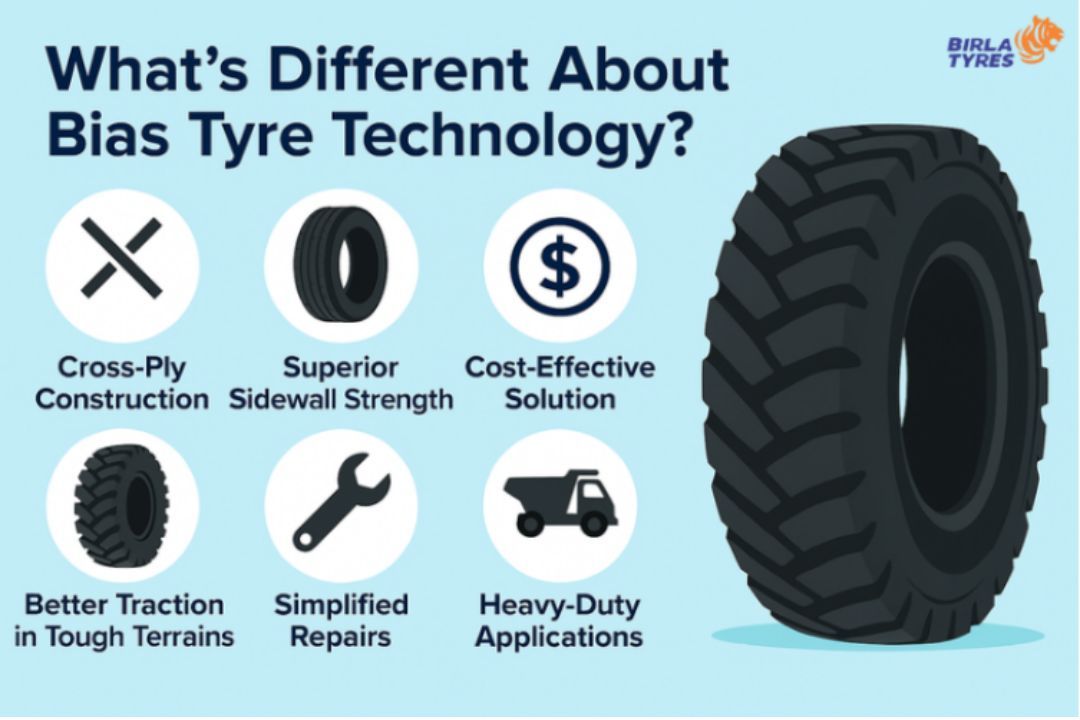
While radial construction uses single-direction tyre plies and features steel belts, bias tyre construction follows overlapping nylon cords that are arranged bead to bead at 30–45° angles. Such construction delivers a uniform, cross-linked structure to efficiently -
- Absorb impact on the road
- Distribute vehicle load
- Resist cuts and punctures on demanding terrains.
The Anatomy of a Birla Bias Tyre Construction
Here’s a simple and easy breakdown of the robust architecture of Birla Bias Tyres, defining the toughness of bias construction:
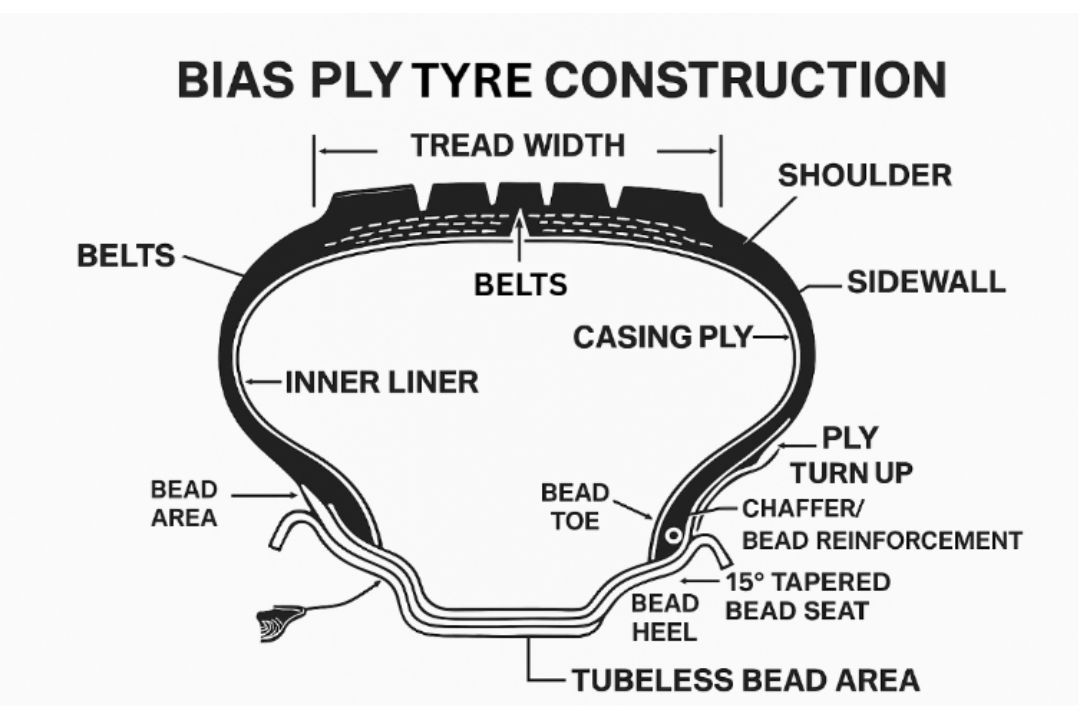
Tread
The tread of Birla bias Tyres is the outermost, ground-contacting layer providing traction. Its specific rubber compound varies by application, but we use proprietary, deep, wear-resistant rubber formulated for aggressive traction on challenging terrain like mud or rocks.
Shoulder
The Birla Tyres bias construction's shoulder connects the tread and sidewall. We reinforce this area with rubber and extra materials for strength, durability, and endurance. This design -
- Resists sidewall scuffing
- Boosts lateral stability
- Improves heat dissipation during cornering.
It also ensures durability and stability during load shifts, enhancing operational safety and providing better ROI for agricultural and commercial fleets through reduced wear.
Sidewall
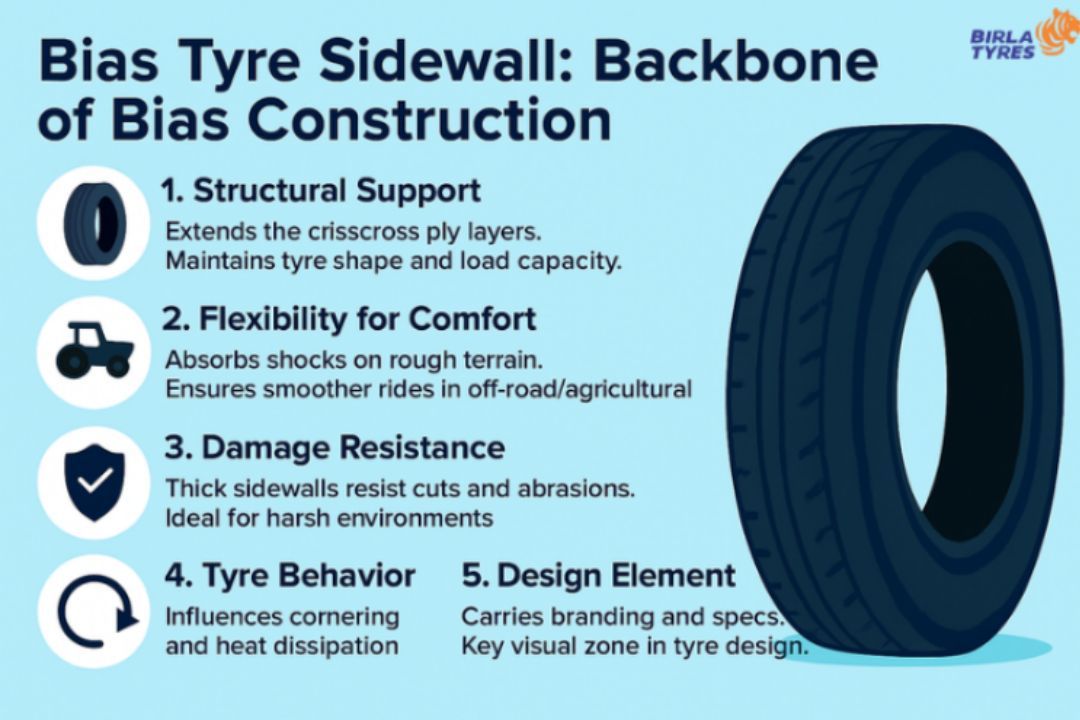
The tyre sidewall connects the tread to the bead (which sits on the rim). While stiffer sidewalls in bus and truck bias tyres improve cornering, handling, and stability, softer sidewalls offer comfort. Our bias tyres feature resilient, thick sidewall engineering for puncture, shock, and bulge resistance.
Bead Zone – More Than Just Wire
The bead area of the bias tyre construction has different crucial elements:
Bead Wire – High-tensile steel wire locks the tyre securely to the rim. It eliminates slippage during torque-intensive tasks.
Bead Filler – The hard rubber enhances rim structural integrity and provides superior steering response and sidewall strength under heavy loads.
Nylon/Steel Chafer – Protective layers like nylon for flexibility and steel for durability keep rim chafing and heat generation in check, especially vital for commercial vehicles on long hauls.
Breaker/Belt
The bias tyre's breaker or belt has a layered, rubberised fabric that distributes impact forces, prevents punctures, and reinforces the structure. Birla Tyres uses specific ply ratings tailored for diverse needs, from construction dump trucks to agricultural tractors.
Carcass
The bias tyre's core is its carcass, built with diagonally-angled nylon cords. This construction provides unmatched resistance for load distribution and prevents tears. It enables agricultural vehicles to carry heavy loads without ply separation or deformation.
Inner Liner
The inner liner of the bias tyre construction ensures that the air remains trapped inside the tyre. Most modern tyres follow a tubeless construction, and the inner liner works as an important component of such a construction method.
Since it’s the first inner layer of the interior surface, it acts as the primary protection against leakage. In short, this portion of the bus and truck bias tyre construction builds a resilient barrier to maintain tyre pressure.
Customer-Centric Benefits: Robustness for Every Segment
Here’s how bias tyre construction caters to different segments of tyres, providing tangible business value to customers:
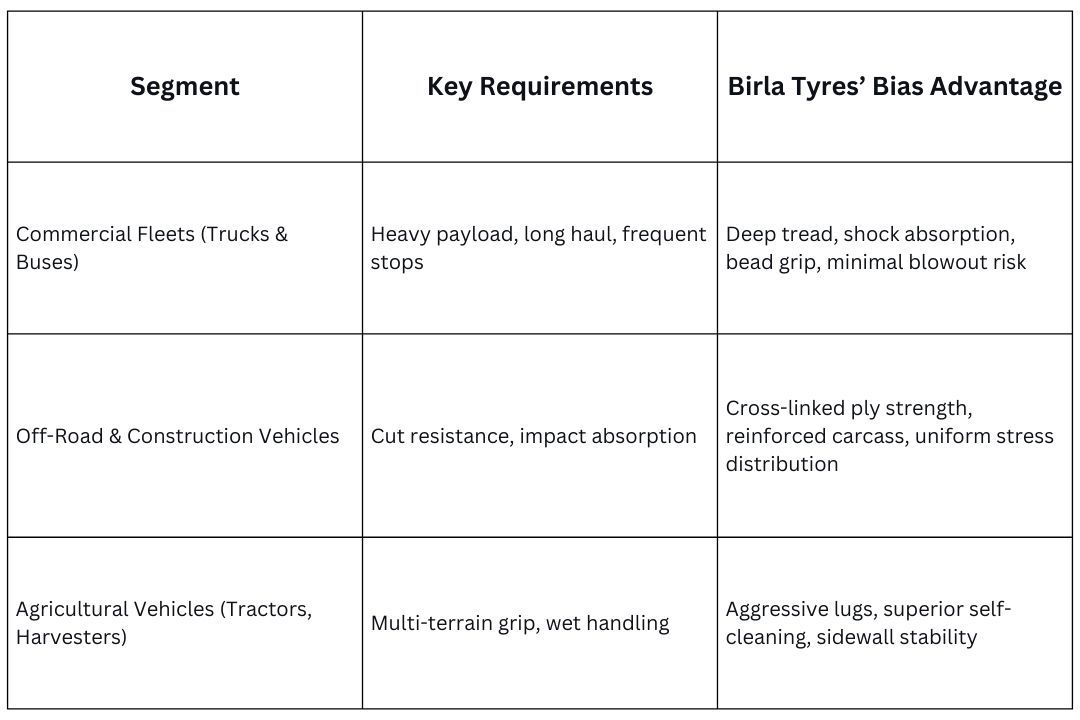
We ensure a longer wear cycle through edge-to-edge ply bonding and smart tread engineering. However, fleet operators and vehicle owners must maintain regular tyre rotation cycles and inspect tread depth to maximize their bias tyres’ longevity.
Built Tough, Built for Every Terrain
With biased tyre technology at Birla Tyres, we aim higher to provide carefully engineered and robust solutions to today’s commercial, off-road, and agricultural transport challenges. We anchor our product development through purposeful innovation and relentless R&D, upholding our brand identity built on strength and resilience.
So, are you conquering your off-road terrains with Birla Tyre? Let us know in the comments.
FAQs
What is the Primary Material Used in the Construction of Bias Tyres?
Bias tyre constructions follow a rubber-coated structure, plies of fabric placed at approximately 30-40° angles. The successive plies of bias ply construction are laid at opposing angles, forming a crisscross patterned design.
What is the Pattern Name of Bias Mining Tyres?
The internal ply cords run diagonally across the tyre in a bias tyre construction. It forms a crisscross pattern, which is unlike the radial construction.
Who uses Bias Ply Tyres?
Bias-ply tyre construction is still relevant today. However, it’s specifically best for local use in construction, agriculture, and utility vehicles. The load-bearing capacity and the ruggedness of bias tyre construction make it resilient against tough terrains like construction sites, roads with potholes, and agricultural farms.