Highway Driving in Summer: Tyre Safety Checklist
Date: 10 April 2026
Summer on Indian highways is brutal. The sun’s beating down, the asphalt’s steaming, and your engine’s already working overtime. But here’s what most drivers forget: your tyres are suffering just as much. In fact, more than you think.
This is not an exaggeration. Asphalt surface temperatures in May-June can cross 60–70°C in places like Rajasthan and Vidarbha. For tyres, that’s not simply hot, that’s punishment.
And if you’re running a fully loaded truck or a packed bus on that kind of surface, every kilometre is a gamble if your tyres aren’t in shape. That’s why smart tyre technology should back up your summer tyre safety checklist.
A Tyre Safety Checklist for Highway Driving in the Summer
So, let’s talk about what you need to check before you head out this summer.
1. Always Start with Air Pressure
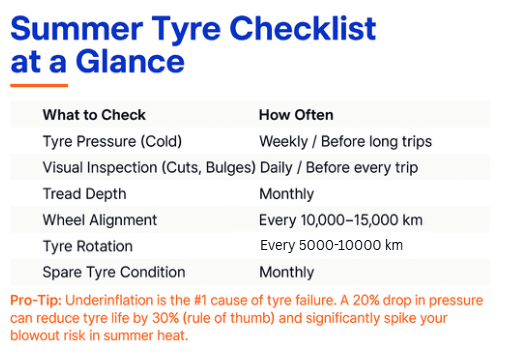
The heat of the Indian summer affects the tyre’s pressure more than in other seasons. So, regular checks on the tyre pressure are non-negotiable.
Morning PSI Check Routine: Check your tyre pressure in the morning, before the vehicle moves even a metre. Once the tyre heats up from driving, the readings go up, and you’ll think everything’s fine, even when it isn’t.
Weekly PSI Check Routine: Do it weekly. Do it before every long trip. And never, ever release air from a hot tyre thinking it’s over-inflated. It’s not. Once it cools, you’ll be running underinflated, and that’s when casings separate, and blowouts happen.
Check Spare Tyres as Well: Also, check the spare tyres of your vehicle. People forget the spare exists until they need it. Keep it 5 PSI above the recommended level to account for slow leakage while it sits unused.
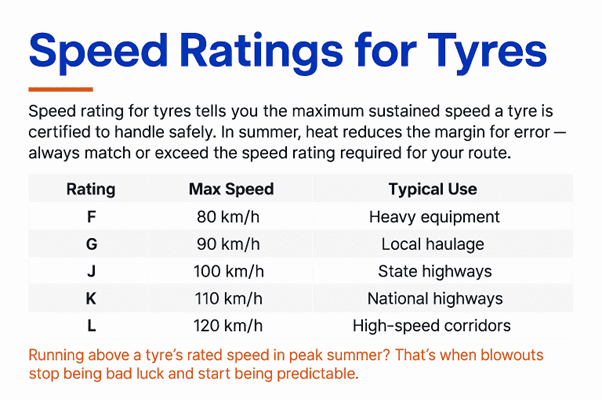
Drive according to Speed Ratings: Take the speed rating for tyres into account when driving. This is a key driving habit that affects the tyres’ health.
If you’re running dual tyres, both sides must have identical pressure. One side carrying more load than the other builds heat unevenly, and that’s a recipe for disaster at 80 kmph on any Indian National Highway.
2. Walk Around the Truck
It doesn’t take long to run a quick tyre inspection. A quick five-minute walk around the vehicle saves you a lot of trouble and downtime costs.
Look at every tyre before you leave.
Check the sidewalls for bulges or blisters; those are signs of internal damage.
Check the tread grooves for nails, stones, or metal shards.
Watch out for dual tyres touching each other. If they do, that causes heat build-up.
Also, check the valve caps. They’re small but critical. Soapy water around the valve stem will quickly show if there’s a slow leak.
These things sink deeper into the tyre carcass when the rubber softens from heat. What’s a minor irritant in January can cause a full-blown blowout in June.
3. Heat Is the Real Enemy in Summer
Overloading is the top cause of summer blowouts. The extra weight generates internal heat that the tyre can’t dissipate fast enough.
If you’re driving through extreme heat, for example, 40°C and above, you must plan your breaks. Let the tyres cool naturally. And whatever you do, don’t spray cold water on hot tyres. It sounds logical, but it’s actually harmful; sudden temperature change cracks the rubber and can compromise the casing structure.
4. Alignment and Age: Don’t Overlook Either
Rotate your tyres every 5,000 to 10,000 kilometres. Get wheel alignment checked at the same interval, or whenever the vehicle pulls to one side. Misalignment wastes tyres fast.
And check the DOT date on your tyres. It’s moulded on the sidewall. Tyres older than 5–6 years are risky regardless of how much tread is left. Rubber degrades from the inside. You won’t see it until it fails.
What Really Gets You Through Summer
Regular tyre inspection following truck maintenance tips are the solutions to getting through the harsh summer in India. More fleet operators are now using smart tyre technology, such as pressure and temperature sensors, that alert you before a problem becomes a breakdown. Real-time data, sent straight to your phone or dashboard. For large fleets running overnight or long-distance routes, it’s a gamechanger.
But even with the best smart tyre technology in place, a physical routine walkthrough still matters. Sensors catch what eyes miss. Eyes catch what sensors can’t. Together, they actually work better.
Your tyres are the only thing between a 20-tonne vehicle and the road. In summer, that relationship gets tested every single day. Birla experts say that five minutes of checking before you leave can mean the difference between delivering on time and being stranded on a highway shoulder, or worse.
Get in touch with us to know more about safe driving in a heated environment.