Indian Summer Heat & Tyre Blowouts: Prevention Tips By Birla Experts
Date: 14 March 2026
Indian summer heat can be taxing, and your vehicle tyres can be the ones taking most of its harsh treatment.
Picture this: You’re driving through Rajasthan or Vidarbha in the peak of May. The road is hot. The temperature is around and often above 45°C. Now imagine the level of tyre heat build-up your vehicle’s managing, especially on long stretches of highways with almost no shade to wait under.
The results? Failure, tyre blowouts, and in the worst case, an accident. Summer heat is one of the reasons for a significant number of road accidents in India. But prevention is possible with the right tips from experts.
So, What Actually Happens During a Blowout?
A tyre blowout isn’t just a flat tyre. It’s a sudden and violent burst of the tyre, causing loss of vehicle control. Imagine yourself cruising on the highway, and the next thing you hear is a loud burst with your steering wheel yanking sideways.
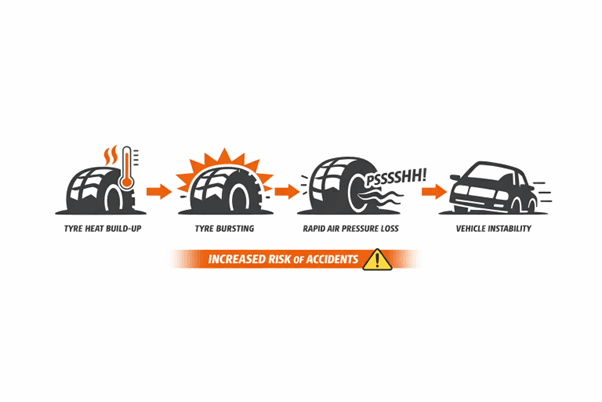
The real picture often looks something like this: tyre heat build-up → tyre bursting → rapid air pressure loss → vehicle instability.
But, in most common cases, a tyre blowout due to heat build-up leads to skidding, swerving, or worse. Sidewall tears and tread separation are also among the other outcomes.
Why Indian Summers Are So Hard on Tyres
Here’s the thing: it’s not just the air temperature that’s the problem. When ambient heat hits 40 to 50°C, the asphalt surface can reach a staggering 70°C. Your tyres are rolling directly on that surface, and internally the heat builds up by another 20 to 30°C.
So, this results in a tyre temperature well above the normal range for common rubber compounds.
A tyre inflated to 32 PSI in the morning can hit 38 to 40 PSI by noon. Therefore, it gets dangerously close to the upper limit for many tyres. Next, with humidity, dust, and bad roads, failures become far more likely for tyres of different types.
Birla Tyres’ Expert Tips to Stay Blowout-Free This Summer
The right habits and the right tyres can make blowouts largely avoidable. Here’s what the experts at Birla Tyres recommend:
Check Tyre Pressure Every Single Week
Not once a month, not when it looks low, check it weekly. And always check the cold pressure before you’ve driven more than 2 km. The target range for most passenger vehicles is 30 to 35 PSI, but heat can push this up by 5 to 7 PSI.
If you’re filling nitrogen for tyres instead of regular air, it helps keep pressure more stable across fluctuations. Consider opting for nitrogen at your next service stop.
Do A Visual Check Before Long Trips
Squat down and look at your tyres closely. Any sidewall bulge is a red flag. So, don’t ignore it. A tyre sidewall bulge means the internal structure is compromised, and it can give way at any time. Also, look for cracks, uneven tread wear, or any object embedded in the rubber.
Don’t Overload Your Vehicle
In summer, especially, try to stay within 90% of your vehicle’s load capacity. Excess weight puts tremendous stress on sidewalls, and heat makes that stress even harder to handle. For bus and truck tyres, adhering to load limits is critical.
Mind Your Speed on Highways
Every tyre has a tyre speed rating, a letter code (J, P, H, etc.) that tells you the maximum sustained speed it’s designed for. Driving above that rating in high heat? That’s when things get dangerous fast. Check your tyre’s rating and respect it.
Park Smartly
This sounds simple, but it makes a real difference. Park in shade wherever possible. If you must park on exposed tarmac for hours in peak summer heat, use tyre mats or reflective covers. It’s a small habit that extends tyre life significantly.
Get Alignment and Balancing Done Regularly
Wheel and tyre alignment and balancing are a must. Generally, try getting it done every 10,000 kms. If you must park on sun-exposed roads or tarmac for extended periods, consider using tyre mats or reflective covers. This small precaution can significantly extend tyre life.
Look After Your Tyres, They’re Looking After You
Your tyres are important. That rubber-made equipment is the only thing between the vehicle, you, and the roads. The heat of Indian summer constantly tests that relationship, with the roads and loads getting harder and more difficult to handle, with constant tyre heat build-up.
But with a little proactive maintenance, you can make a significant difference and ensure passenger and vehicle safety.
If you’re not sure about the condition of your tyres heading into summer, consult a tyre expert for a quick inspection. A 20-minute check could genuinely prevent a serious accident, especially in extreme heat conditions.